
The OCIA is typically involves four stages, including an initial inquiry period, a catechumenate (formal study of the faith), a period of purification and enlightenment, and finally, the reception of the sacraments at the Easter Vigil.
Stage 1: Evangelization and Inquiry
This is an opportunity for you to ask questions you’ve wondered about regarding Christianity and the Catholic Church! This part of the process can happen at any time, and for as long as needed. You will be connected with someone at a parish, or church community, near you who would love to hear your story and help you along the way.
The next step is to declare your intention to enter into relationship with the Church, learning its ways and participating in its lifestyle.
If you have never been baptized, you will be invited to celebrate what is called the Rite of Acceptance into the Order of the Catechumenate, which welcomes inquirers into the beginning stages of becoming Catholic. You will then be known as a catechumen, which means “one in whom the Word of God echoes.”
If you have already received baptism in another Christian denomination, you will be invited to celebrate what is called the Rite of Welcome, which is designed to welcome the baptized members of OCIA into the community and to prepare them for formation. You will then be known as a candidate.
Stage 2: Catechumenate/Candidacy
During this stage, you are accompanied by a sponsor, or mentor, and you will participate in the Church’s prayer on Sundays and other special days. Together with your sponsor, you will also meditate on Scripture weekly, get acquainted with folks in the local Church community and participate in service opportunities.
This part of the process typically takes one year, allowing you to experience the life of the Church and its cycle of celebrations for a whole liturgical year. A candidate, or those who are already baptized, might receive a shorter time of preparation.
During this season, you, your sponsor, and the priest guiding you will continue to pray about your readiness to take the next step, called The Rite of Election or Continuing Conversion. This rite marks the final turning point in your preparation for receiving the Sacraments.
At this rite, all catechumens and candidates are given a new title, Elect, because God has elected, or chosen you to become a child of God through the waters of baptism.
Stage 3: Purification and Enlightenment
This stage usually takes place during the season of Lent, about 40 days before Easter. During this time the Elect (you), your sponsor and the whole Church community begin a time of preparation for Easter through prayer, fasting and almsgiving.
Stage 4: Initiation and Mystagogy
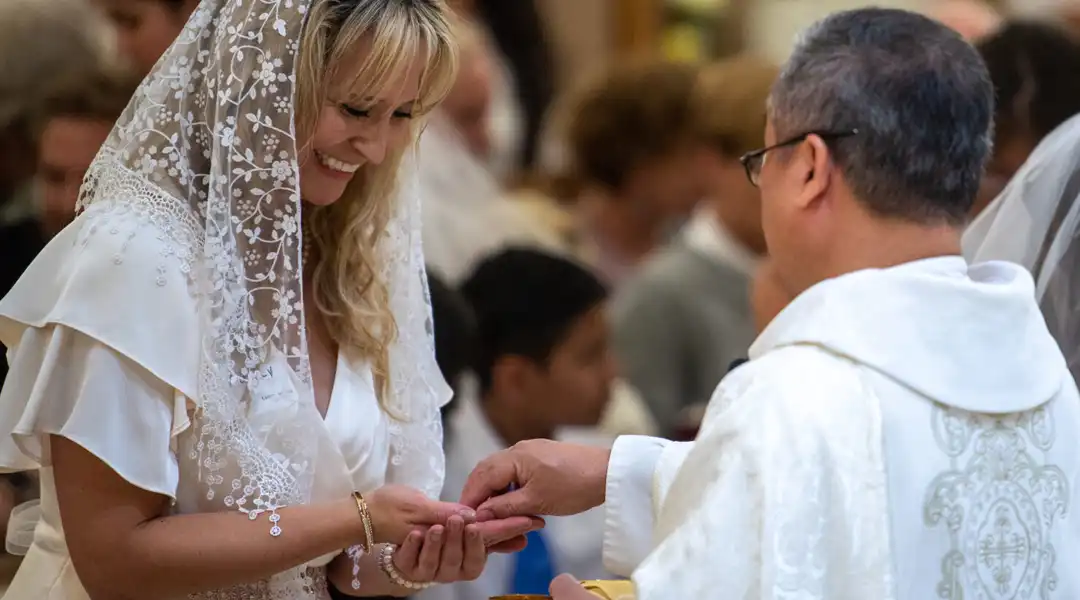
This is the moment you have been preparing for! At the Easter Vigil, the Elect come into full communion with the Catholic Church through Baptism, First Communion and/or Confirmation. The newly baptized now gather on Sundays and fully participate in the Eucharist and the life of the Church.
For the next 50 days, you will also continue to meet together for ongoing community and prayer. This time is called mystagogy or a “getting under the mystery” – really delving into what has taken place in your heart. This is a season that will help you understand the change that has taken place within you and help you integrate your faith into everyday life.
What is the OCIA and Catechumenate?
The Order of Christian Initiation of Adults (OCIA) is the official ritual text of the Church which directs, supports and sustains the way of faith and conversion by which adults (and children who have reached the age of reason) are initiated into the Catholic Church. Although many Catholics are not familiar with it, the Order of Christian Initiation of Adults was restored to the Church in 1972 at the request of the Second Vatican Council as the normative way by which adults (and children who have reached the age of reason) are to be initiated into the Catholic Church.
The rite is called: The Order of Christian Initiation of Adults
The process is called: The Catechumenate
In 1988, the National Conference of Catholic Bishops of the United States of America published the ritual text we now use.
The OCIA is normative for the Christian initiation of adults and children of catechetical age. The initiation of catechumens is a gradual process that takes place within the community of the faithful.