
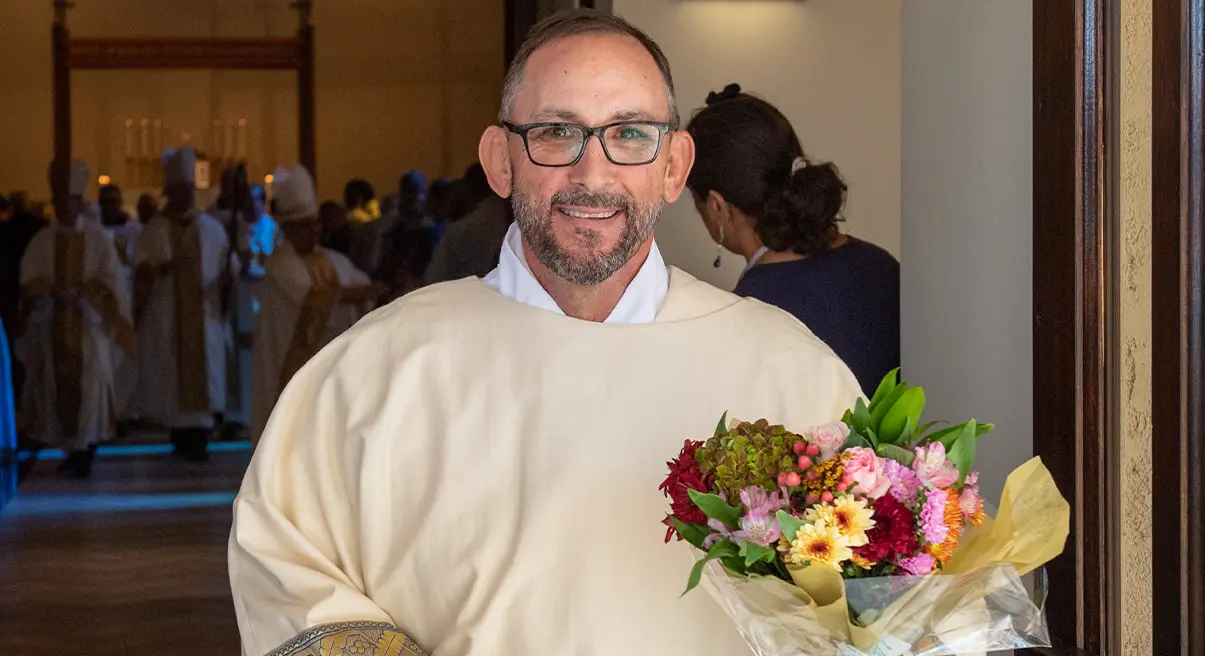
In the Diocese of Phoenix, the path to becoming a permanent deacon is a prayerful and transformative process, unfolding through four distinct stages: Inquirer, Applicant, Aspirant, and Candidate. Each stage is designed to deepen discernment, strengthen faith, and prepare men to serve as ordained ministers of charity, word, and liturgy. Guided by the Office of the Diaconate and rooted in the teachings of the Church, this five-year formation program equips deacons to live out Christ’s call to serve with humility and love.
Levels of Diaconal Admission:
Diaconal formation involves four stages.
- Inquirer: Recommended by Pastor — no obligation or commitment
- Applicant: Submitted an application — committed to first year of prayer, reading and discernment while application is further reviewed
- Aspirant: Application accepted as complete — committed to 2nd year of formation with psychological, background, and marriage evaluations
- Candidate: Formal Diaconal formation lasting 3 years with more advanced theological studies
Catechetical Formation:
A solid catechetical foundation is an integral part of diaconal formation. Completion of the combined Adult Faith Formation/Parish Leadership program offered by the Kino Institute of the Diocese of Phoenix is required prior to entering your third year of formation.. To be accepted into the diaconal formation program, you have to have been accepted into the Kino program as well. Alternatively, you are welcome to complete one or two years of Kino before applying to diaconal formation.
Inquirer:
Is an individual who has met with, written to, telephoned or otherwise communicated with an official of the Office of the Diaconate indicating a serious interest in exploring admission to the diaconate; and/or an individual nominated by his pastor. These individuals are asked to complete a Diaconate Inquiry Form as soon as they can. They are then briefly screened for such eligibility factors as age, marital status, residence, and ministry experience often over the phone. If appropriate, the individual is provided with an information packet and put on the mailing list. In the eight-month period prior to the formation of a new cohort, inquirers will be asked to attend one of the Inquiry Meetings held throughout the diocese.
Those who still feel called to continue discernment will be asked to make an appointment before April 15th for a home interview with their family. If it appears that the inquirer meets the criteria, those who have received a recommendation from their pastor will be sent an application. It is the pastor who initially presents him for consideration into diaconal formation through a letter that confirms he is a practicing Catholic of good repute and in good standing. Formation meetings begin in the Fall (of odd-numbered years).
Applicant:
Is an individual who has completed and filed the forms for admission to the diaconate and has been notified in writing that the admission packet has been received. Applications are generally accepted only during the months of March through July, every odd year, unless a special arrangement has been made with the Diaconate Office. If an application is received after the July 31 deadline it cannot be considered. Applications are screened, and the admission’s packet audited by the staff in the order in which they are received.
A completed application includes:
- Completion of all relevant parts of the application including three essays.
- Letter of petition from the individual to the Bishop has been received
- Letter of approval from his wife has been received if he is married
- Letters of recommendation have been received
- Transcripts from high school and college have been received
- Participation in required formation meetings
- Testing and Examinations completed including but not necessarily limited to the following:
- Medical Examination
- Dental Examination
- Educational Examinations as appropriate
The notification of acceptance as an official applicant comes from the Formation Office.
If accepted, applicants enter into a year of prayer, spiritual reflection and discernment known as the Spirituality Year. They will engage in directed spiritual reading and reflection. They must also participate in mandatory formation events, complete the Practicum on Personal Prayer and Discernment and join a “Discernment Circle.” Applicant status is normally a one-year period. Applicants are required to limit their involvement in parish ministries during this year in order to focus more specifically on prayer and spiritual growth.nt in parish ministries during this year in order to focus more specifically on prayer and spiritual growth.
Aspirant:
Admission as an Aspirant means that the petitioner has been admitted to the (typically) year-long propaedeutic period (preparation for study or instruction). It is marked by participation in the formation monthly weekend formation classes, one 5-week academic class per semester, , a practicum in social outreach and justice, participation a monthly “discernment circle,” initiation of monthly spiritual direction with a priest, and completion of a battery of tests and interviews. Spiritual reading, reflection, prayer and discernment will continue. Admission to Aspirancy requires the following criteria:
- Application has been audited and found complete
- Staff Screening for disqualifiers and impediments
- Proof of enrollment or completion of the Kino Program has been received. Involvement in a Discernment Circle
- An interview with either the Associate Director of Education and Formation, the Director, or delegate has been completed
- The Associate Director of Education and Formation presents an overview of each applicant to the Admission and Scrutiny Committee. This body makes a recommendation to the Director of the Office of the Diaconate regarding the disposition of each applicant
- The Director of the Office of the Diaconate reviews the recommendation and the application to determine whether to forward it to the Bishop
- The Bishop reviews the applicant’s file and decides whether to invite the individual to continue discernment as an Aspirant.
Candidate:
Admission as a Candidate means that the Aspirant has been invited by the Bishop to enter a time of formal preparation for ordination that requires 3 years or more. Admission to candidacy requires successful participation in the aspirancy year along with criminal and financial background tests, marriage evaluation by a marriage and family counselor, and a psychological evaluation by a psychologist.
During this period the Candidate will receive advanced theological education and practical diaconal formation. After the first year as he progresses in discernment and formation, he will be installed into the Ministry of Lector and then approximately a year later to the Ministry of Acolyte.