
Permanent Deacon in the Catholic Church
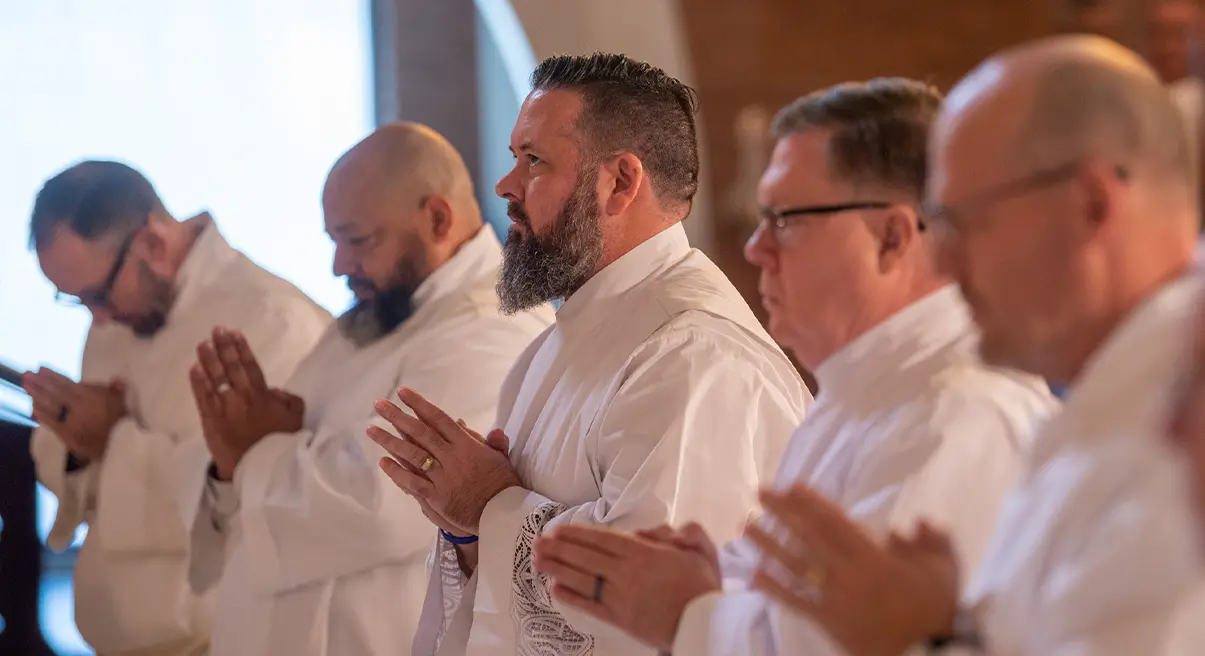
In the early Church, ordained deacons had a unique role in the Christian community along with priests and bishops, a role that was largely lost in the Roman Church before the second millennium. At the Second Vatican Council, on September 29, 1964, the Council Fathers approved the restoration of this office as a permanent order, a part of the ancient three-fold hierarchy of Holy Orders: bishop, priest, and deacon. Through the grace of ordination, the deacon is configured to Christ the Servant. He is not ordained to the priesthood, but to a ministry of service on behalf of his bishop. He serves as a bridge between the laity and the bishop along with his presbyters over which communication and love flow in both directions. As in the early church, the deacon works in three major areas: liturgy, word, and charity.
The deacon’s liturgical ministry includes proclaiming the Gospel, directing the prayers of the faithful, assisting the celebrant at the altar and distributing Holy Communion. Outside of Mass, the deacon can preside at baptisms, weddings, funerals, and many blessings. A deacon’s ministry of the Word involves preaching occasionally, evangelizing, and teaching in sacramental preparation and faith formation. A deacon is also found ministering in the streets, hospitals, prisons, and wherever there is need. A deacon’s ministry of charity intentionally makes the holy sacrifice of charity among the poor and suffering a visible and symbolic expression of the charitable and redeeming sacrifice of Jesus on the Cross to which all the Faithful are united in the Eucharist. As part of his bishop’s ministry to his flock, the deacon humbly serves the laity in their holy vocation to bring the gospel from the ambo to the streets and to share the Love received at the altar with the world.